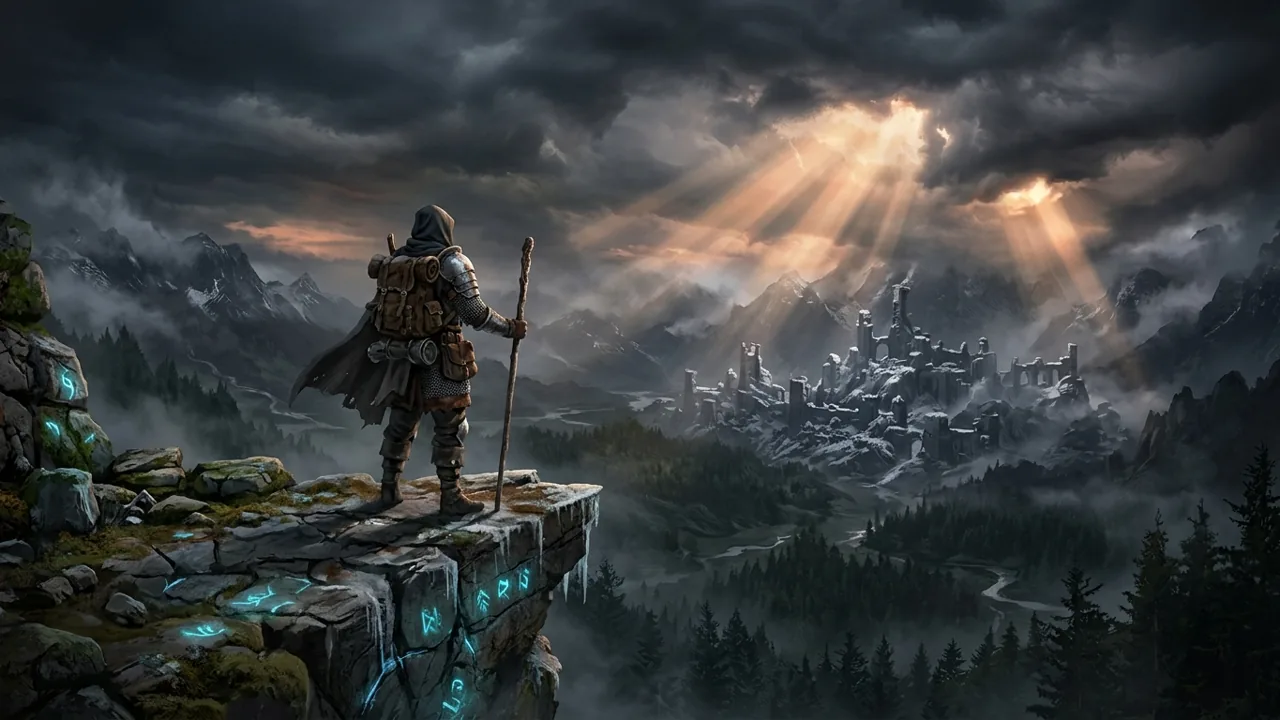
Outward 2 Early Access Launches February 8, 2027 — What's In, What's Not, and How to Prep Your Build
After years of watching Nine Dots quietly iterate on the original Outward's janky-but-beloved formula, we finally have a concrete date: Outward 2 enters Early Access on February 8, 2027, landing simultaneously on Steam, Epic Games Store, and GOG. No platform exclusivity, no weird staggered rollout. That alone is worth noting.
This isn't a soft announcement. The studio has published a roadmap window (12 to 18 months of active EA development), a content list for the launch build, PC system requirements, and confirmation that co-op is in from day one. Let's go through what actually matters.
The Early Access Window: 12 to 18 Months Is Realistic
Nine Dots is estimating a 12-to-18-month EA period before version 1.0. For context, the original Outward launched in March 2019 after a relatively short marketing cycle, and it shipped rough — save-system quirks, co-op desyncs, and balancing issues that took over a year of patches to iron out. The studio has been explicit that they're doing EA precisely to avoid repeating that.
The stated goal is to use player feedback to tune the survival economy, difficulty tuning, and endgame loop before locking in a full release. If you're the type who prefers a polished experience, 2028 is probably your target. If you like being part of shaping the game — and you can tolerate some rough edges — February 2027 is a reasonable entry point.
What's Included at EA Launch
Nine Dots has confirmed that the Early Access build ships with:
- A complete region of the world — Aurai returns, though the map has been redesigned from the ground up. The EA launch content covers one significant geographic area with multiple distinct biomes.
- All three starting class archetypes — the Warrior Monk, the Rogue Engineer, and the Philosopher are confirmed playable from day one.
- The full trait system — this is new to Outward 2 and replaces part of the original's skill tree logic (more on this below).
- Online and local co-op — same-screen split and online two-player co-op are both confirmed at launch.
- The core survival loop — hunger, thirst, sleep, temperature, and injury systems are all present.
What's not in at launch: additional regions, the full faction storyline, and whatever endgame content Nine Dots is holding back for 1.0. The studio has been deliberately vague about scope here, which is fair — they don't want to overpromise.
The Trait System: How It Changes Character Building
This is the mechanical story of Outward 2's early development cycle, and it's worth spending real time on.
In the original Outward, your character was built through a combination of a Backpack (starting kit), a Class (passive + active skills), and a Side Discipline. The result was a surprisingly deep system, but it was also opaque — the game rarely explained why certain stat combinations worked, and new players frequently locked themselves into undertuned builds without realizing it.
Outward 2 introduces Traits, which function as a third layer on top of your class and equipment choices. Traits are persistent modifiers you select at character creation and unlock through play. Some are passive stat adjustments; others gate specific mechanics.
The confirmed example that's been making rounds: Lone Wolf is a trait that modifies how the game handles your starting conditions and certain solo-scaling mechanics. Nine Dots has said it affects how some systems scale when you're not playing co-op, but the exact numerical effects on starting inventory or stat distribution haven't been officially detailed — community reports suggest it alters your initial item loadout, but treat that as unconfirmed until the studio publishes specifics.
What is confirmed: traits interact with your chosen class. A Philosopher with certain traits will play differently from a Philosopher without them, even before you start spending skill points. This is a meaningful departure from the original, where class selection was the dominant early-game variable.
Three Classes, Three Very Different Survival Approaches
Here's what each of the three EA launch classes implies for your survival strategy:
Warrior Monk
The straightforward frontline pick, but "straightforward" is relative in Outward 2. Warrior Monks have high stamina thresholds and better recovery from the game's physical status effects (broken bones, bleeding). Their weakness is resource consumption — heavy armor, two-handed weapons, and the food requirements to sustain combat-heavy play will burn through your supplies faster than the other two classes.
For Early Access, Warrior Monk is likely the most reliable class for learning the new combat system without also managing complex resource chains. If you died to Outward 1's survival system more than its enemies, start here.
Rogue Engineer
The crafting and trap-focused class. Outward 2 has expanded its crafting system significantly, and Rogue Engineers reportedly have access to recipe variants and trap types that other classes can't easily unlock. This class has the highest skill ceiling for the survival loop specifically — a well-played Rogue Engineer can establish a supply chain that makes the late game considerably more stable.
It's also the class with the worst early-game margin for error. If you don't know what you're doing with Outward 2's crafting trees yet, you will die to starvation and cold before you die to anything with teeth.
Philosopher
Magic users in Outward have always been punishing to play — mana management, cast-time vulnerability, and expensive spell components create a risk/reward loop that's unforgiving but satisfying. The Philosopher in Outward 2 carries that tradition forward, with confirmed changes to how Intelligence interacts with both magic and (reportedly) some melee skills.
The specific attribute formula linking Intelligence to melee scaling has been discussed in community spaces but not confirmed by Nine Dots — file that under community-reported, unconfirmed. What's confirmed: Philosophers have access to weather-manipulation spells tied to Outward 2's expanded dynamic weather system. Practically, this means a Philosopher can alter environmental temperature — which ties directly into the survival system in ways that make them uniquely powerful in certain biomes.
Survival: What's Changed From Outward 1
The core pillars — hunger, thirst, rest, temperature — are all back. But Nine Dots has made two significant structural changes:
1. The shelter system is more explicit. In Outward 1, sleeping in the wild was possible but punished you with debuffs and left you vulnerable. Outward 2 formalizes a campsite-building layer. You're not building bases in the survival-craft sense, but you're making deliberate choices about rest locations, fire placement, and weather cover that have mechanical weight.
2. Injury persistence is redesigned. The original game's injury system was frustrating partly because recovery was expensive and slow with little feedback on what was helping. Outward 2 redesigns recovery around a clearer treatment hierarchy — different injuries require different items and rest durations, and the UI communicates this more directly. This is a quality-of-life change that veterans might not notice, but it's one of the bigger entry barriers the studio is explicitly lowering.
PC Requirements: Can Your Machine Run It?
Nine Dots hasn't published the full spec sheet as of this writing, but the NotebookCheck coverage confirms that minimum and recommended specs have been released alongside the announcement. Early reports suggest the minimum spec is roughly on par with a mid-range 2022 PC — think GTX 1070 / RX 5700 territory at 1080p medium settings. The original Outward was not demanding, and the sequel appears to continue that tradition of prioritizing accessible system requirements over graphical ambition.
We'll update with the full spec table once it's formally published in a press kit.
Console: Not at EA Launch
Outward 2 is a PC-only launch on February 8, 2027. Nine Dots has confirmed that console versions (PlayStation and Xbox) are planned but will follow after the PC 1.0 release — no specific timeline given. If you're waiting for a console version, you're looking at late 2028 at the earliest, realistically.
Should You Buy In at EA?
The honest answer: it depends on your relationship with the original.
If you bounced off Outward 1 because it felt unfinished and hard to read, the Early Access period is not the moment to try again. Wait for 1.0.
If you loved Outward 1's willingness to let you fail in interesting ways, and you're curious how the trait system and expanded survival layers change the formula — February 8 is a reasonable buy-in. Nine Dots has a track record of consistent post-launch support, and their stated EA goals are specific enough to hold them accountable.
The multiplatform day-one release across Steam, Epic, and GOG means you can buy wherever suits you without worrying about exclusivity windows or delayed updates. That's a small but meaningful signal that the studio is managing this EA launch carefully.
Sources
- NotebookCheck: Outward 2 is coming to early access (2026-11-04) — official EA date, platform list, content scope, co-op confirmation, system requirements, console roadmap
- Mezha.net: Outward 2 early access starts February 8, 2027 (2026-11-04) — corroborating date confirmation
- Community discussion re: Lone Wolf trait effects and Intelligence/melee scaling — unconfirmed, not reflected in mechanical claims above