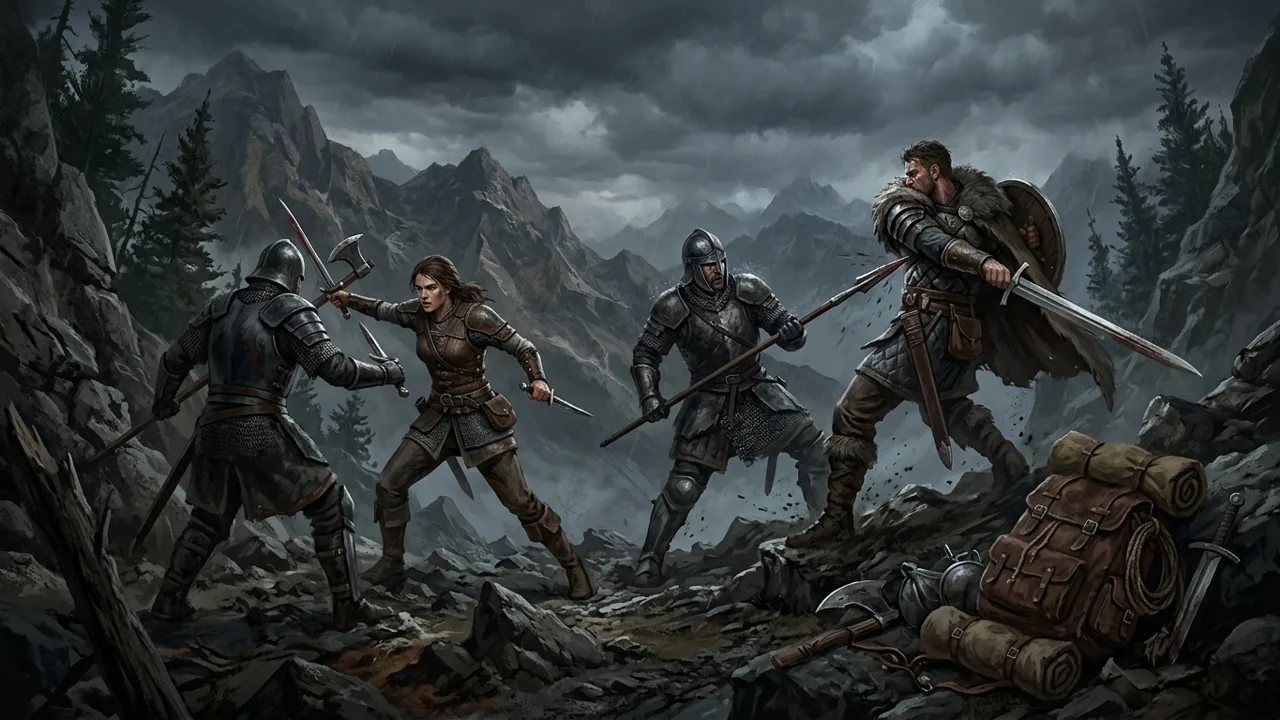
Outward 2 Combat and Progression Overhauled — Here's What We Know Before 2027
Nine Dots Studio made a call that not every small studio would make: they had an Early Access date set for July 7, 2026, and they scrapped it. Outward 2 is now targeting a 2027 launch window, with no specific date confirmed beyond the year. CEO Guillaume Boucher-Vidal explained the decision plainly — after playtests and an open beta, the team concluded that releasing the game in its current state would mean charging money for something that wasn't ready.
That kind of transparency matters, especially for a sequel to a cult-favorite survival RPG that built its reputation on being genuinely, unapologetically hard. The original Outward wasn't for everyone, and Nine Dots knows it. The question heading into 2027 is whether the changes they're making to the sequel preserve what made the first game worth playing, or sand off enough edges that it loses its character.
Here's everything confirmed so far — along with what the beta community has been saying.
Combat Is Faster, But That's the Point of Debate
The biggest structural change in Outward 2 is to the combat system, and it's also the most contentious.
Nine Dots has redesigned movement and attack animations to be noticeably faster and tighter than the original game. The headline feature is attack canceling: players can now interrupt a swing mid-animation to transition into a block or dodge. In the first Outward, committing to an attack meant riding it out — that deliberate weight was part of the game's identity, and punished players for being reckless.
The intent behind attack canceling is clear in theory. The developers want mistakes in combat to feel like the player's fault — not a product of sluggish controls or animations that refuse to cooperate. If you swing into an enemy's counterattack, that's on you. You had the option to cancel.
Dual wielding has also been completely reworked. In the sequel, you can freely combine any one-handed weapon or off-hand item — swords, daggers, shields — without the restriction of preset pairings. Two-handed weapons get expanded move sets through off-hand inputs, adding depth while nominally keeping the methodical pacing the series is known for.
This is all confirmed by developer previews and hands-on coverage from outlets including Gameoneer and GamingBolt.
What the Beta Says (Community-Reported, Unconfirmed as Fixed)
The open beta surfaced some friction points that players have been vocal about on Reddit. These are community-reported observations and should be treated as snapshots of a build that Nine Dots is actively improving — not final verdicts.
-
Sword + Dagger is considered overpowered. Players in the beta widely reported that this specific dual-wield combination outpaces other weapon setups by a wide margin. Whether that's been addressed in more recent internal builds is unknown.
-
Two-handed weapons feel underserved. Several players noted that one-handed weapon speed and flexibility make two-handed builds feel sluggish without offering a clear damage payoff in return. Given that Nine Dots specifically cited two-handed weapon depth as a goal, this gap is presumably something they're looking at.
-
Human enemies feel overtuned. A recurring criticism in beta feedback is that human enemy AI exhibits extreme aggression — dodging mid-combo, attacking during what should be the player's punish window, and in some cases hitting fast enough to interrupt recovery animations. Some players described fights against human enemies as less challenging and more frustrating.
-
The "Souls-like" identity concern. A segment of the community argues that the faster combat pace moves Outward 2 away from the cautious, deliberate gameplay the franchise was built on, and toward something closer to a mainstream action RPG. Nine Dots' stated philosophy — "anti-power-fantasy," no hand-holding, grounded survival — suggests they're aware of this tension, but whether the final product threads that needle is still an open question.
None of these are confirmed to be unresolved; the delay exists precisely to address this kind of feedback.
The Exercise System Changes How You Progress
Character progression in Outward 2 is getting a meaningful overhaul. The sequel introduces the Exercise system, which runs alongside the returning trainer-based skill acquisition from the first game.
Rather than leveling up through combat or accumulating generic experience points, you improve by doing things. Perform tasks related to survival, crafting, and fighting, and you complete "exercises." Once complete, you can convert a finished exercise into a permanent stat boost or passive ability — if you choose to. There are five attribute branches available, and you cannot max all of them. Every choice you commit to shapes your character in a direction that can't be fully reversed.
This keeps the spirit of the original Outward's build philosophy intact: you're not building toward omnipotence, you're specializing in ways that create genuine playstyle identity. The three Breakthrough Points system also returns, which means you still have a hard limit on how many advanced skill trees you can unlock from trainers. Those points remain among the most consequential decisions you'll make.
The system has been described in preview coverage from GamingBolt and Gameoneer, though full details of all five branches and their specific bonuses have not yet been published.
Character Creation Now Gives You a Reason to Start Somewhere
The original Outward's character creation was bare by most RPG standards. Outward 2 is substantially expanding it.
You'll select from family backgrounds and personality traits that determine starting stats and initial equipment — a familiar RPG framing that fits the game's "ordinary person" philosophy well. More interesting is the addition of three distinct starting scenarios, each tied to a different region and accompanied by a unique opening quest. One confirmed location from playtest builds is Simeon's Bastion, located within the kingdom of Lavant.
The framing here matters. Rather than materializing in a village with a vague reason to go exploring, you have an actual starting context — a job, a place you're from, a reason to eventually leave. That's a small but meaningful improvement for a game that depends on the player feeling grounded and mortal rather than chosen.
The three-location system also has obvious replay implications for build experimentation, since each origin presumably steers you toward different early resources and quest hooks.
Survival Mechanics Are Staying Intact
If you played the first game and spent an embarrassing amount of time starving to death or freezing in the wrong mountain range, the sequel won't let you forget those lessons.
Hunger, thirst, and inventory weight management all return. Seasonal shifts and environmental temperature continue to play a significant role — you'll need to prepare for heat and cold as distinct hazards, not just background flavor. The developers have described wanting the world to feel more dynamic and reactive than the first game's environments, though specific details on how weather or seasons change mechanically remain limited in published coverage.
The survival loop is the foundation that everything else sits on top of. The combat revisions and Exercise system can be argued about, but the core identity of Outward — eat your food, check your map, pack your bag — appears to be staying.
What the Delay Actually Means
Outward 2 going from "Early Access in July 2026" to "sometime in 2027" is a significant slip, but the reasoning is straightforward. The open beta produced feedback that Nine Dots wasn't willing to ignore. According to Boucher-Vidal's public statement (via WCCFtech), the studio made the call that releasing in that state would fail to meet player expectations — and their own standards.
That's a hard position for an independent studio to take, especially with a game that already has an audience watching. The Steam page currently lists December 30, 2027 as the date (via IGDB metadata on Kotaku's game page), but Nine Dots has not confirmed a specific date — that placeholder figure should not be treated as an announced release target.
The platform remains PC-only at this stage. No console announcements have been made.
What to Watch For
Between now and launch, there are a few things worth tracking:
-
Post-beta patch notes or developer blogs. Nine Dots has shown willingness to explain design decisions publicly. If they address the weapon balance concerns or the combat "feel" debate, that's worth covering as a standalone piece.
-
New starting location reveals. Only Simeon's Bastion has appeared in public-facing content. The other two origins remain unannounced.
-
Exercise branch details. We know there are five attribute branches and that you can't max them all. The specifics of what those branches offer — and whether they interact with Breakthrough skills — haven't been published.
-
Co-op status. The original Outward had two-player co-op as a core feature, and the sequel is expected to support it. Confirmed details on how co-op interacts with the new progression systems haven't been reported yet.
Outward 2 is shaping up to be a genuine attempt to improve on the first game without abandoning what made it distinctive. Whether Nine Dots can thread that needle — faster and more responsive without becoming a standard action RPG, punishing without being frustrating — is the central question the 2027 release will answer.