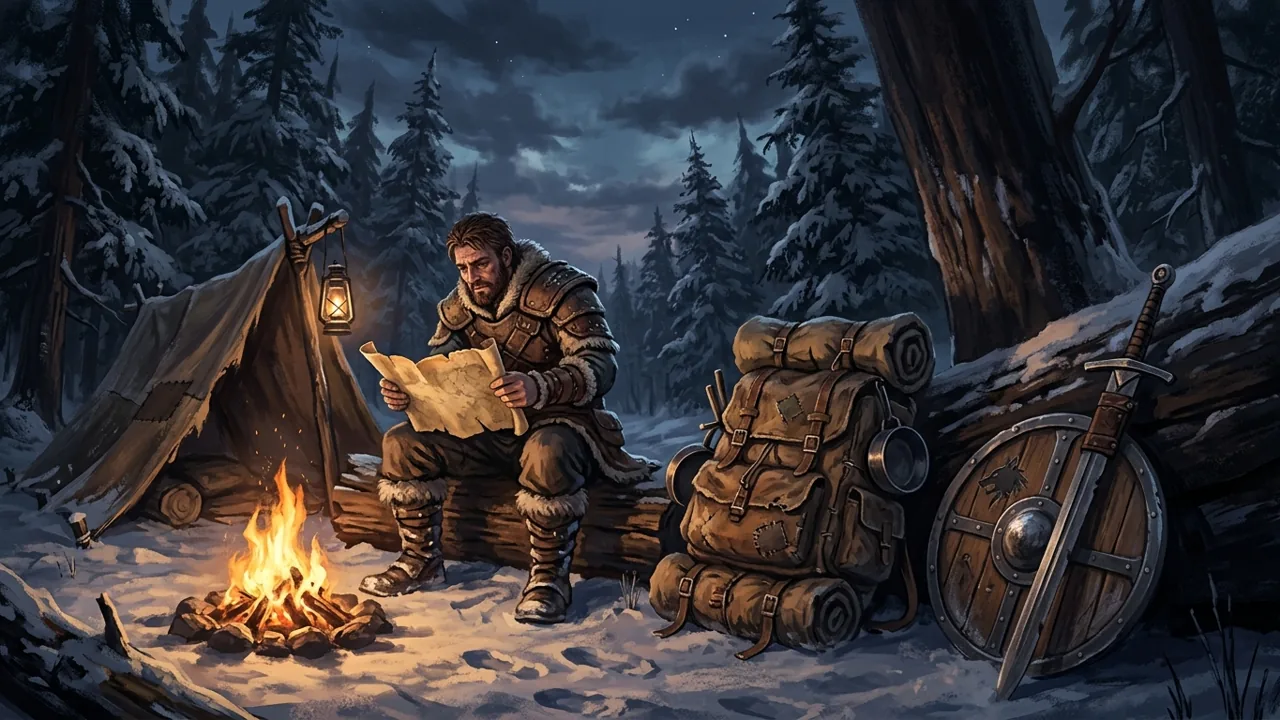
Outward 2 Delayed to 2027: How Beta Feedback is Refining Its Cruel Combat and Hardcore Systems
Nine Dots Studio recently made the difficult call to delay Outward 2's Early Access launch, moving it from its planned July 2026 window to sometime in 2027. The decision followed critical feedback from the game's initial beta phase. While delays are rarely welcomed by fans eager to return to the rugged world of Aurai, CEO and Creative Director Guillaume Boucher-Vidal made it clear that the extra development time is vital for fixing underlying technical instabilities and fine-tuning the sequel's signature hardcore systems.
For a game that prides itself on challenge, stability is not just a quality-of-life feature—it is the foundation of the entire experience.
Technical Performance and the Frustration of Survival
In a standard action-RPG, a sudden crash or a multiplayer disconnection is a minor annoyance. In Outward 2, where death can mean losing your hard-earned backpack, waking up halfway across the map with a permanent debuff, or failing time-sensitive quests, a technical failure is catastrophic.
During the beta, testers frequently encountered connection losses and stability issues, especially in cooperative play. When these network hiccups combined with early balance issues—such as an unforgiving economy and stiff combat feedback—it created a sense of frustration that ran counter to the developers' intentions. Rather than feeling the thrill of surviving a harsh wilderness, players felt cheated by the software itself.
Nine Dots is using the delay to ensure the sequel launches as a polished package. The focus will not be on adding features but rather on stabilizing performance across different hardware configurations and polishing the flow of quests. The goal is to present a game that feels cohesive and reliable, eliminating the rough edges that plagued the beta.
Immersion Through Friction
Despite the delay, those hoping for an easier ride in Aurai will be disappointed. Nine Dots is fully committed to its philosophy of "immersion through friction." Survival elements like hunger, thirst, temperature management, and the complete lack of mini-maps or automatic quest markers remain central to the Outward 2 experience.
The developer's core idea is that you are not a chosen hero; you are an ordinary traveler. The friction of survival forces you to respect the environment. The extra time in development will be spent making these survival systems read clearer to the player, rather than watering them down. The studio wants the difficulty to feel like a deliberate design choice, not a byproduct of poor optimization.
Outward 2 Tips: Preparing for Unfair Battles
If you want to survive the combat in Outward 2, you must abandon the expectation of balanced encounters. The design team has explicitly stated that they do not aim to create "fair" combat. Enemies will attack in groups, use dirty tactics, and hit harder than you do.
To thrive, you must adapt your approach:
- Assess the terrain: Before drawing your weapon, look at the environment. Can you lure a bandit patrol into local wildlife? Can you bottleneck a group in a narrow pass?
- Prep work is mandatory: Never enter a dungeon or take a fight without checking your status. Consume stam-regen foods, apply elemental varnishes to your blades, and set down tripwire traps.
- Know when to run: Running away and dropping your heavy backpack to gain speed is a core mechanic. Returning to a fight later with better preparation is always smarter than dying for pride.
Smaller Factions and a More Human World
Beyond combat adjustments, the developer highlighted changes to the narrative structure. Outward 2 features smaller, more intimate factions. By focusing on tighter groups rather than sprawling political entities, the team hopes to foster deeper personal connections between players and NPC factions.
Coupled with dynamic weather patterns, regional hazards, and the ability to choose different starting locations, the sequel aims to make every playthrough feel distinct. While you will have to wait until 2027 to set out on this new journey, the focus on stability and polished difficulty suggests that the return to Aurai will be well worth the wait.