Outward 2 Early Access Delayed to 2027: Progression and Survival Mechanics Detailed
Nine Dots Studio has officially delayed the Early Access release of Outward 2 to 2027. Originally slated for a summer 2026 launch, the developers decided to extend the timeline to implement adjustments and polish the experience following feedback from recent closed beta tests. While the delay means players will have to wait longer to return to the world of Aurai, newly revealed details highlight major mechanics that aim to make the survival RPG much more tactical and immersive than the original game.
Here is what we know so far about the updated progression, revamped combat, and survival mechanics of Outward 2.
The Exercise System: Tying Progression to Action
Instead of standard experience points and leveling, Outward 2 features a progression mechanic called the Exercise system. This design ties character growth directly to the player's physical activities within the game.
Under the new system, players complete a finite web of micro-achievements linked to specific actions, such as executing perfect dodges, staggering enemies, or harvesting survival materials. Completing these challenges permanently increases base attributes—like Strength, Agility, and Willpower—alongside minor passive bonuses.
Earning breakthrough points to advance a trainer's skill tree is also more involved. To unlock these major abilities, players must typically satisfy three criteria:
- Pay the trainer a gold fee.
- Acquire and read specific books.
- Complete the corresponding combat or survival exercises.
According to community-reported leaks and forum speculation, players may be limited to a set number of active exercise slots (reportedly 20 per character). While unconfirmed by the developers, such a limit would encourage highly specialized character builds and prevent characters from becoming jacks-of-all-trades.
Backpack Improvements and Survival Mechanics
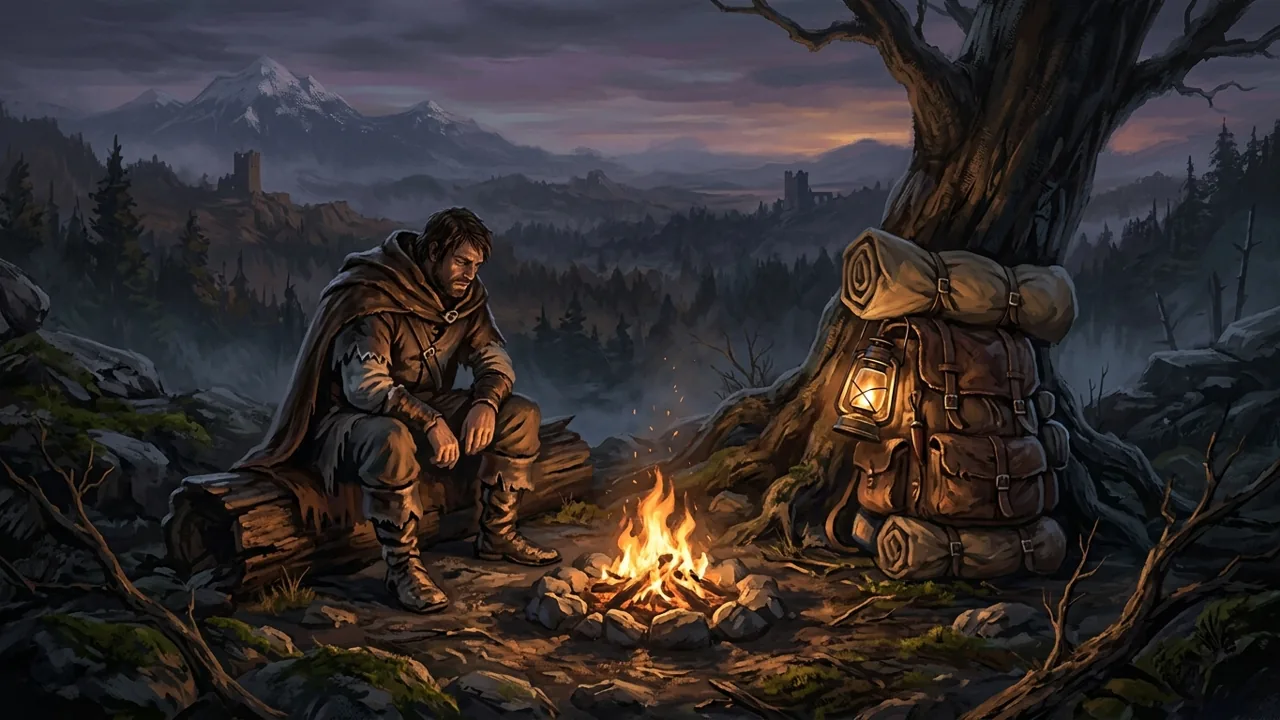
Inventory management is a core feature of the Outward 2 experience, but the sequel introduces adjustments to make weight management more strategic. The most notable change is the introduction of dedicated external attachment slots on backpacks.
Items like lanterns, sleeping bags, tents, and cooking pots can now be strapped directly to the exterior of the backpack. These attachments function without counting toward the character's baseline weight limit. This allows adventurers to carry critical survival gear without sacrificing valuable internal space.
Exploration maintains its hands-off philosophy. There are no automatic quest trackers, compass markers, or minimaps telling players exactly where to go. Players must read landmarks, use environmental clues, and follow NPC directions to navigate. Survival is further affected by a dynamic weather system, shifting seasons, and realistic temperatures that demand proper clothing and shelter.
Tactical Combat and the Two-Tiered Dodge
Nine Dots Studio has overhauled the combat mechanics to address criticism of the first game's stiffness. Attack animations are smoother, and both stamina management and enemy stagger thresholds play a more prominent role in melee encounters.
Mobility receives a significant upgrade with a dual-tiered dodge system:
- Quickstep: A fast evade similar to Bloodborne's movement. The quickstep uses minimal stamina and is completely unimpeded by the weight of a backpack.
- Classic Roll: For situations that demand full invincibility frames, players can still perform a traditional dodge roll. However, doing so still requires dropping the backpack to avoid slow recovery animations.
Unreal Engine 5 and Cooperative Survival
Moving to Unreal Engine 5 allows the developers to introduce more detailed environments, realistic lighting, and advanced water physics. These visual improvements are directly tied to survival gameplay, making hazardous weather conditions like heavy blizzards or intense heatwaves visually distinct and dangerous.
The sequel will fully support cooperative play, letting two adventurers split the burden of survival. Cooperative play continues to be a major focus, with shared camp preparation and coordinated combat tactics remaining essential for overcoming the threats of Aurai.